


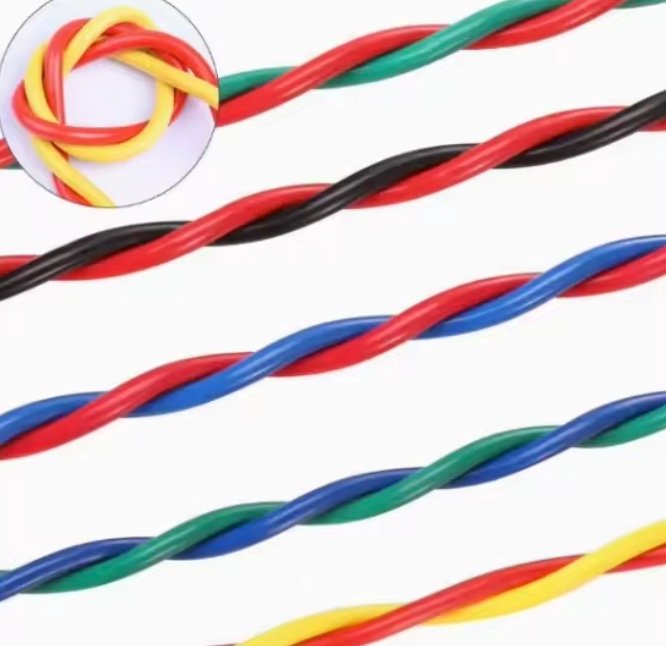
When specifying cables for industrial, commercial, or infrastructure projects, selecting the proper insulation material is critical. Two of the most widely used options—cross-linked polyethylene (XLPE) and polyvinyl chloride (PVC)—offer distinct advantages depending on the application. This guide breaks down their technical differences, performance characteristics, and cost implications to help engineers, contractors, and procurement teams make informed decisions.
Key Differences Between XLPE and PVC
1. Thermal Resistance
- XLPE:
- Continuous operating temperature: 90°C
- Short-circuit withstand: 250°C for 5 seconds
- Thermal stability: Maintains mechanical integrity under prolonged heat exposure
- PVC:
- Continuous operating temperature: 70°C
- Short-circuit withstand: 160°C for 5 seconds
- Thermal degradation: Softens above 75°C, leading to deformation
Why it matters: In high-temperature environments (e.g., industrial furnaces, underground ducts), XLPE cables reduce the risk of insulation failure. A 2022 case study by Siemens demonstrated a 40% longer lifespan for XLPE-insulated cables in a steel plant compared to PVC alternatives.
2. Electrical Performance
- XLPE:
- Lower dielectric loss (0.001–0.003)
- Higher insulation resistance (≥100 GΩ·km)
- Ideal for high-frequency data transmission and HVAC control circuits
- PVC:
- Higher dielectric loss (0.02–0.05)
- Lower insulation resistance (10–50 GΩ·km)
- Suitable for low-voltage power distribution (≤450V)
Real-world impact: For projects requiring signal integrity (e.g., automation systems, security networks), XLPE minimizes interference. In a 2023 retrofit project at a German chemical plant, switching from PVC to XLPE reduced signal noise by 70%, eliminating costly downtime.
3. Mechanical and Environmental Durability
- XLPE:
- Tensile strength: 15–25 MPa
- UV resistance: Moderate (requires jacketing for outdoor use)
- Chemical resistance: Excellent against oils, acids, and solvents
- PVC:
- Tensile strength: 10–15 MPa
- UV resistance: Poor (degrades under sunlight)
- Chemical resistance: Moderate (swells in contact with hydrocarbons)
Practical consideration: For direct burial applications or installations in corrosive environments (e.g., wastewater treatment plants), XLPE provides superior long-term reliability.
Cost Analysis: XLPE vs. PVC
| Factor | XLPE | PVC |
|---|---|---|
| Material Cost | 20–30% higher upfront | Lower initial investment |
| Lifespan | 30–50 years (thermal aging class E) | 15–25 years |
| Maintenance | Minimal (self-healing properties) | Higher risk of insulation cracks |
| Total Cost of Ownership | Lower over 10+ years | Higher due to replacements |
Example: A 2021 project for a Middle Eastern solar farm used XLPE-insulated cables for underground PV array connections. Despite a 25% higher initial cost, the client saved $120,000 in maintenance over five years compared to PVC alternatives.
Application-Specific Recommendations
Choose XLPE for:
- High-voltage power systems (≥600V)
- Industrial machinery with ambient temperatures >60°C
- Critical infrastructure requiring 30+ year reliability (e.g., hospitals, data centers)
- Underground or direct-burial installations
Choose PVC for:
- Budget-sensitive residential wiring
- Indoor lighting circuits (temperatures <50°C)
- Short-term temporary installations
Compliance and Safety Standards
Both materials meet global benchmarks but differ in niche certifications:
- XLPE:
- Compliant with IEC 60502, BS 6622, ICEA S-95-658
- Flame retardancy: IEC 60332-3 (with LSZH jacket)
- PVC:
- Compliant with IEC 60227, BS 6004
- Flame retardancy: IEC 60332-1 (standard grade)
Tip: For fire safety in public buildings, pair PVC with halogen-free flame-retardant (HFFR) jackets to reduce toxic smoke emissions.
Conclusion: Balancing Performance and Budget
While PVC remains cost-effective for low-risk applications, XLPE’s superior thermal, electrical, and mechanical properties justify its higher price in demanding environments. For large-scale industrial projects, the long-term savings from reduced downtime and replacements often outweigh the initial investment.
Final Advice:
- Consult manufacturers for custom formulations (e.g., UV-stabilized XLPE for outdoor use).
- Prioritize IEC-certified suppliers with proven track records in similar applications.
- Factor in total lifecycle costs, not just upfront pricing.
Need help selecting the right insulation material for your next project? Contact our engineering team for free technical consultations and sample testing.
This article is optimized for keywords like “XLPE vs PVC insulation,” “cable material selection,” and “industrial cable specifications” to improve search engine visibility.